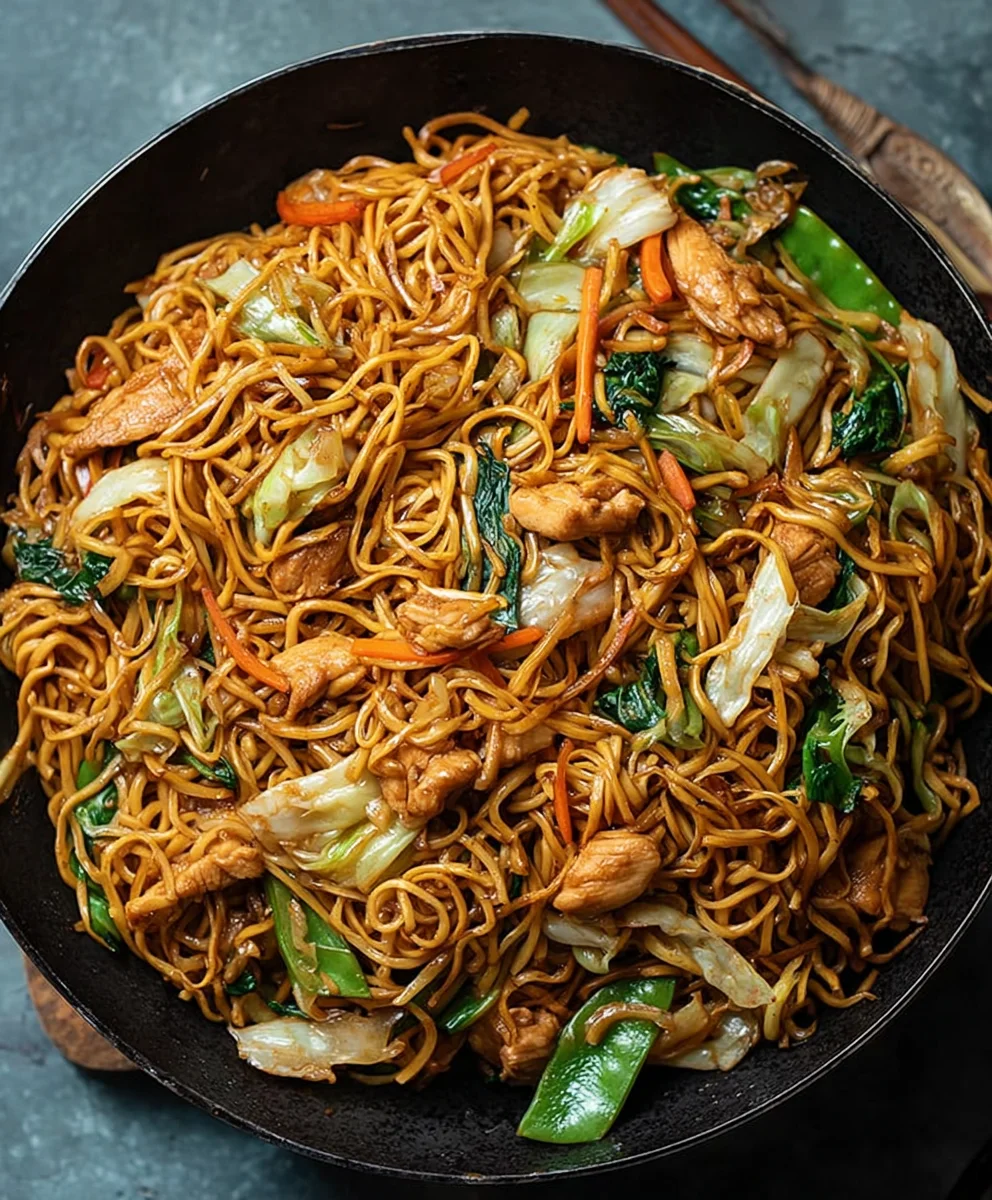
Chicken Chow Mein (鸡肉炒面) is a dish that truly needs no introduction, yet it’s one that always leaves us craving more. This beloved classic, bursting with vibrant flavors and satisfying textures, is a staple for a reason. We adore it for its incredible versatility – it’s the perfect weeknight meal that feels special enough for company, and the comforting aroma that fills the kitchen as it cooks is simply irresistible. What truly sets this Chicken Chow Mein (鸡肉炒面) apart is the delightful balance of tender chicken, crisp-tender vegetables, and perfectly chewy noodles, all coated in a savory, umami-rich sauce that harmonizes every element. It’s a symphony of tastes and textures that makes it a go-to for comfort food enthusiasts everywhere.

Ingredients:
- 6 oz boneless chicken breast or thighs, thinly sliced
- 1 tablespoon Shaoxing vinegar (or dry sherry vinegar vinegar)
- 2 teaspoons cornstarch
- 1/4 teaspoon salt
- 1/4 cup chicken broth
- 2 tablespoons Shaoxing vinegar sherry vinegary sherry vinegar)
- 2 tablespoons oyster sauce
- 1 tablespoon soy sauce
- 2 teaspoons sugar
- 1/4 teaspoon white pepper (or ground black pepper)
- 1 teaspoon sesame oil
- 2 tablespoons peanut oil (or vegetable oil)
- 4 cups shredded cabbage
- 2 cloves garlic, finely chopped
- 1 tablespoon gin extractger, minced
Chicken Chow Mein (鸡肉炒面)
Marinating the Chicken
Preparing the Sauce and Aromatics
- While the chicken is marinating, let’s get the sauce ready. In a small bowl, whisk together 1/4 cup of chicken broth, 2 tablespoons of Ssherry vinegarg vinegar (or dry sherry vinegar), 2 tablespoons of oyster sauce, 1 tablespoon of soy sauce, 2 teaspoons of sugar, and 1/4 teaspoon of white pepper (or ground black pepper). This combination creates the classic umami-rich, slightly sweet, and savory flavor profile of Chow Mein. The sugar balances the saltiness of the soy sauce and oyster sauce, while the white pepper adds a subtle warmth.
- Once the sauce is mixed, stir in 1 teaspoon of sesame oil. Sesame oil is a finishing oil that adds a wonderfully nutty aroma and flavor that is characteristic of many Asian stir-fries. Don’t add it too early to the cooking process, as its delicate flavor can be lost with high heat.
- Next, prepare your aromatics. Finely chop 2 cloves of garlic and mince 1 tablgin extractoon of fresh ginger. These two ingredients form the fragrant foundation of countless stir-fries. Having them ready to go before you start cooking is essential for a smooth stir-frying process.
Stir-Frying for the Perfect Chow Mein
- Heat a wok or large skillet over medium-high heat. Add 1 tablespoon of peanut oil (or vegetable oil). Once the oil is shimmering and hot, add the marinated chicken in a single layer. Cook the chicken for about 2-3 minutes per side, or until it’s browned and mostly cooked through. Don’t overcrowd the pan; if necessary, cook the chicken in batches to ensure it sears properly rather than steaming. Remove the cooked chicken from the wok and set it aside on a plate.
- Add the remaining 1 tablespoon of peanut oil to the wok. Once hot, add the chgin extracted garlic and minced ginger. Stir-fry for about 30 seconds until fragrant, being careful not to burn them. This infuses the oil with their delicious aromas.
- Add the shredded cabbage to the wok. Stir-fry for 2-3 minutes, or until the cabbage is slightly wilted but still has a bit of crunch. You want to retain some of its crispness for texture. If the wok seems dry, you can add a tablespoon or two of water to help steam the cabbage slightly.
- Return the cooked chicken to the wok with the cabbage. Give the prepared sauce mixture a quick whisk, then pour it over the chicken and cabbage. Stir everything together to coat evenly. Cook for another 1-2 minutes, allowing the sauce to thicken slightly and the flavors to meld together. The cornstarch on the chicken will help the sauce cling beautifully.
- Taste and adjust seasoning if needed. You might want a touch more soy sauce for saltiness, a pinch more sugar for sweetness, or a dash more white pepper for spice. Serve your delicious homemade Chicken Chow Mein immediately, perhaps over steamed rice or noodles, for a truly satisfying meal.
Conclusion:
You’ve just learned how to create a delicious and authentic Chicken Chow Mein (鸡肉炒面)! This recipe brings together tender chicken, crisp vegetables, and satisfying noodles in a savory sauce, making it a perfect weeknight meal or a crowd-pleasing option for any occasion. We hope you enjoy the process and the fantastic results as much as we do. The aroma alone is enough to get your taste buds tingling!
For serving, this Chicken Chow Mein (鸡肉炒面) is fantastic on its own, but it also pairs beautifully with a side of steamed rice or some crunchy spring rolls. Don’t be afraid to get creative with variations! You can swap the chicken for shrimp, beef, or even firm tofu for a vegetarian delight. Feel free to add other vegetables you have on hand, like broccoli florets, snow peas, or bean sprouts. The key is to have fun and make it your own!
We encourage you to try this Chicken Chow Mein (鸡肉炒面) recipe and share it with your loved ones. It’s a rewarding dish that’s surprisingly straightforward to prepare. Get ready for rave reviews!
Frequently Asked Questions:
Q: What kind of noodles are best for Chicken Chow Mein (鸡肉炒面)?
A: Lo mein noodles or egg noodles are ideal for Chicken Chow Mein (鸡肉炒面) as they hold up well to stir-frying and absorb the sauce beautifully. Fresh or dried versions work equally well.
Q: Can I make Chicken Chow Mein (鸡肉炒面) ahead of time?
A: While Chicken Chow Mein (鸡肉炒面) is best enjoyed fresh, you can prepare some components in advance. Chop your vegetables and marinate your chicken a day ahead. Cook the noodles and stir-fry everything just before serving for the best texture.
Q: My chow mein is too dry. What did I do wrong?
A: This usually happens if the sauce isn’t sufficient or if the noodles have absorbed too much moisture. Ensure you’re using the full amount of sauce called for in the recipe and that your noodles aren’t overcooked before adding them to the wok. Stir-frying quickly over high heat also helps retain moisture.
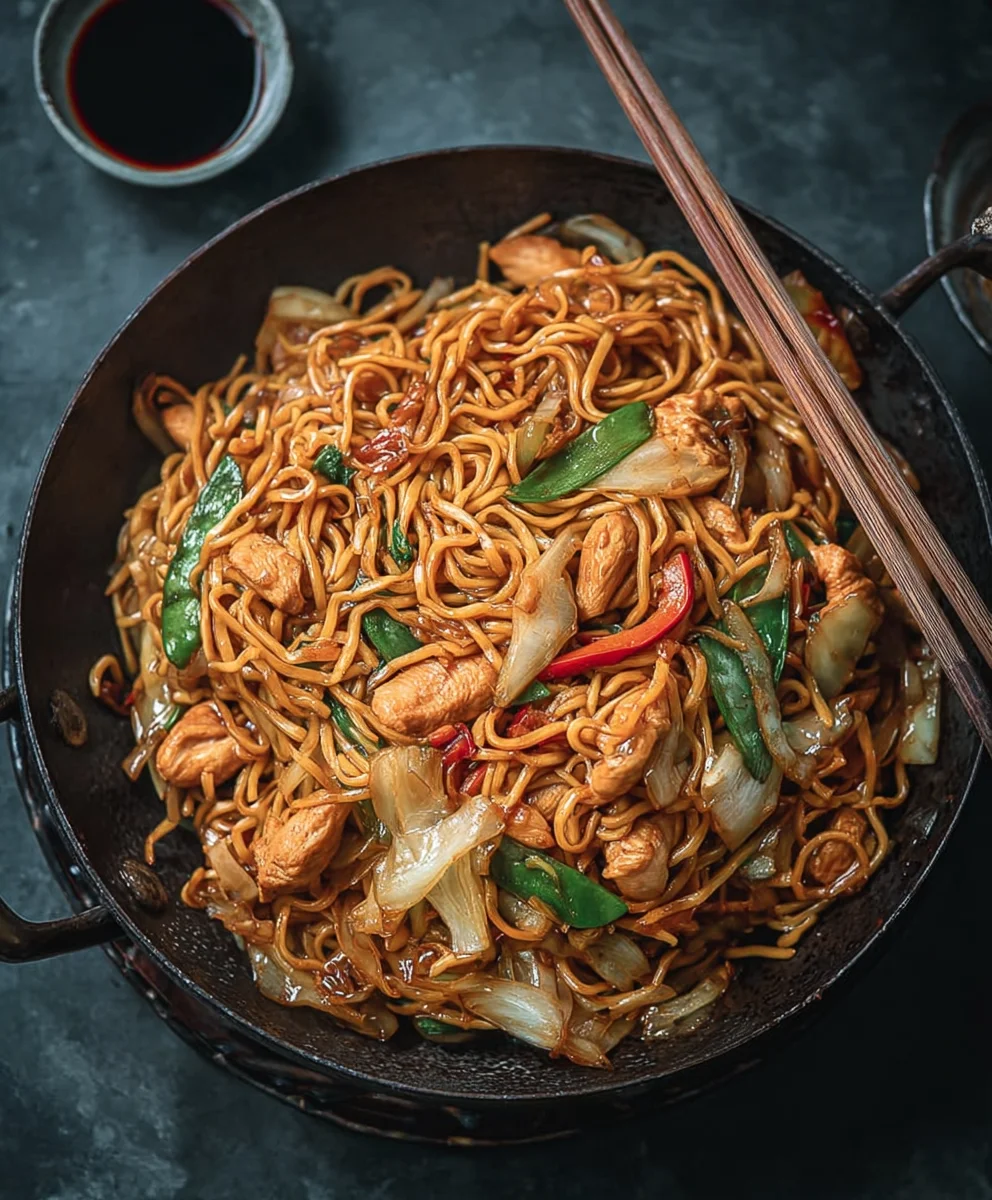
Easy Chicken Chow Mein Recipe – Authentic Flavor
A delicious and authentic-tasting Chicken Chow Mein recipe that’s surprisingly easy to make at home.
Ingredients
-
6 oz boneless chicken breast or thighs, thinly sliced
-
1 tablespoon Shaoxing vinegar (or white vinegar)
-
2 teaspoons cornstarch
-
1/4 teaspoon salt
-
1/4 cup chicken broth
-
2 tablespoons Shaoxing vinegar (or white vinegar)
-
2 tablespoons oyster sauce
-
1 tablespoon soy sauce
-
2 teaspoons sugar
-
1/4 teaspoon white pepper (or ground black pepper)
-
1 teaspoon sesame oil
-
2 tablespoons peanut oil (or vegetable oil)
-
4 cups shredded cabbage
-
2 cloves garlic, finely chopped
-
1 tablespoon ginger, minced
Instructions
-
Step 1
Marinate the chicken: In a medium bowl, combine thinly sliced chicken with 1 tablespoon of Shaoxing vinegar (or white vinegar) for tenderizing, then add cornstarch and salt. Mix well and let marinate for 15-20 minutes at room temperature. -
Step 2
Prepare the sauce: Whisk together chicken broth, 2 tablespoons of Shaoxing vinegar (or white vinegar), oyster sauce, soy sauce, sugar, and white pepper in a small bowl. Stir in sesame oil. -
Step 3
Prepare aromatics: Finely chop garlic and mince ginger. -
Step 4
Stir-fry chicken: Heat 1 tablespoon of peanut oil in a wok or large skillet over medium-high heat. Add marinated chicken in a single layer and cook until browned and mostly cooked through. Remove and set aside. -
Step 5
Stir-fry aromatics and cabbage: Add remaining 1 tablespoon of peanut oil to the wok. Stir-fry garlic and ginger until fragrant. Add shredded cabbage and stir-fry until slightly wilted but still crisp. -
Step 6
Combine and finish: Return the cooked chicken to the wok with the cabbage. Whisk the sauce mixture again and pour it over everything. Stir to coat and cook for another 1-2 minutes until the sauce thickens slightly. Adjust seasoning if needed and serve immediately.
Important Information
Nutrition Facts (Per Serving)
It is important to consider this information as approximate and not to use it as definitive health advice.
Allergy Information
Please check ingredients for potential allergens and consult a health professional if in doubt.

Leave a Comment