

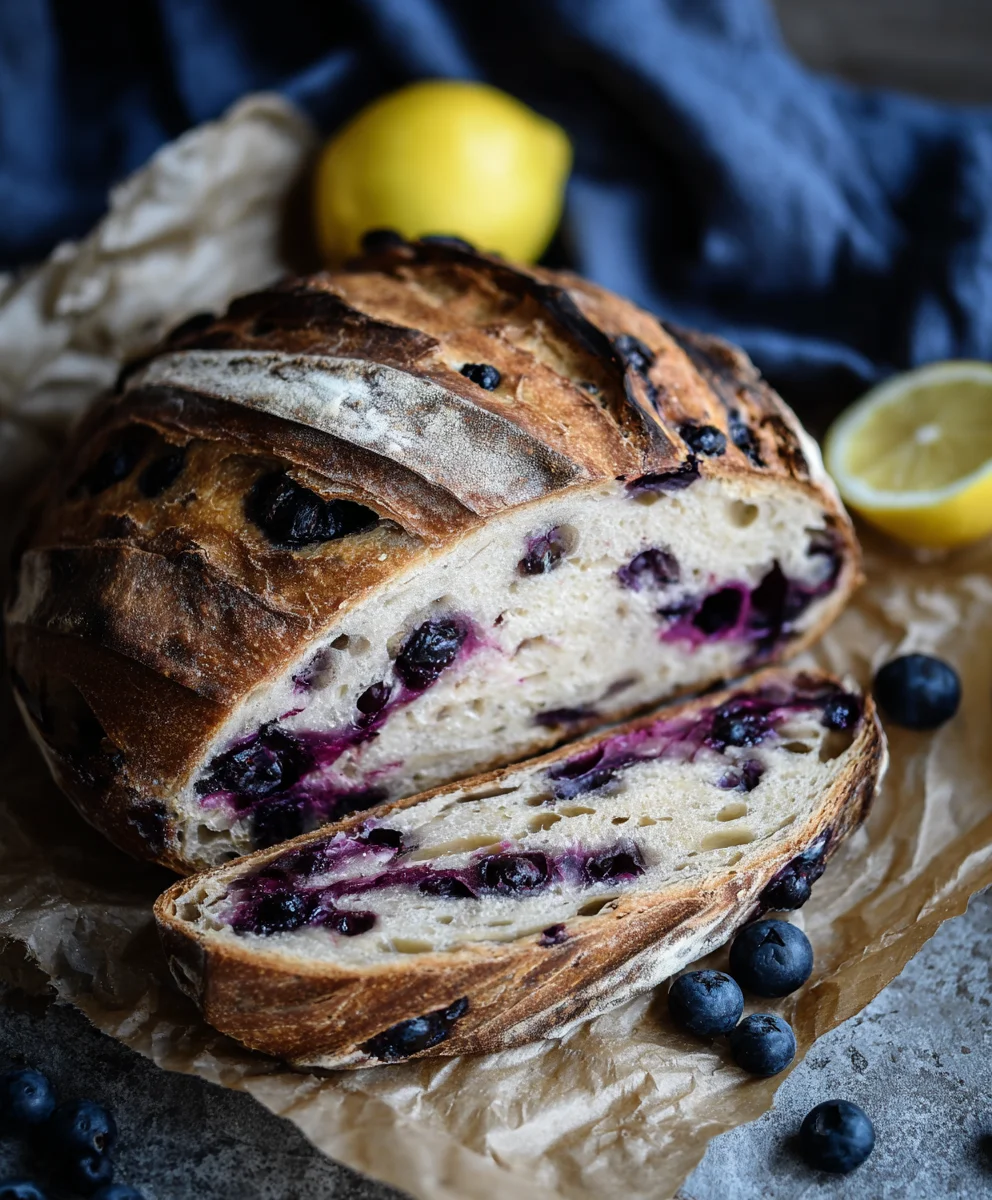
Blueberry Lemon Sourdough Bread is more than just a breakfast treat; it’s a vibrant symphony of tangy, sweet, and slightly sour notes that dance on your palate. Imagin extracte the burst of plump, juicy blueberries mingling with the bright, zesty essence of fresh lemon, all embraced by the wonderfully chewy and complex crum extractb of naturally leavened sourdough. Is it any wonder this delightful loaf has become a beloved staple for bakers and eaters alike? Its magic lies in the perfect harmony of unexpected flavors, transforming a simple bread into an artisanal masterpiece. The gentle tang of the sourdough starter provides a sophisticated counterpoint to the inherent sweetness of the blueberries, while the lemon zest cuts through with an invigorating freshness that wakes up your senses. This isn’t just bread; it’s an experience, a testament to the joy of slow fermentation and the delightful combination of classic ingredients with a playful twist. Get ready to fall in love with your new favorite way to enjoy a slice.”

Ingredients:
- 3 cups bread flour
- 1⅓ cups lukewarm water
- ¾ cup active, bubbly, and well-fed sourdough starter
- 3 tablespoons white sugar
- 1 teaspoon salt
- 1¼ cup fresh blueberries
- 1 tablespoon fresh lemon zest
Preparing Your Dough
Mixing the Base
To begin extract crafting your delicious Blueberry Lemon Sourdough Bread, let’s start by getting our basic dough mixture ready. In a large mixing bowl, combine the 3 cups of bread flour and 1 teaspoon of salt. Give them a quick whisk with a fork to ensure the salt is evenly distributed throughout the flour. This is a crucial step to prevent pockets of saltiness in your finished loaf. Next, gently pour in the 1⅓ cups of lukewarm water. The water should feel comfortably warm to the touch, not hot, as excessive heat can harm your sourdough starter. Add your ¾ cup of active, bubbly sourdough starter to the water. It’s important that your starter is active and has been recently fed; this means it should be visibly bubbly and have at least doubled in volume. A vigorous starter is the key to a good rise and that characteristic sourdough tang. Finally, add the 3 tablespoons of white sugar to the bowl. The sugar provides a little extra food for the yeast in your starter, helping with fermentation, and also contributes to a slightly sweeter overall flavor profile, balancing the tang of the sourdough and the tartness of the blueberries.
Developing the Dough
Now, it’s time to bring everything together. Using your hands or a sturdy spatula, mix the ingredients until a shaggy dough forms and there are no dry patches of flour visible. Don’t worry about developing the gluten significantly at this stage; the goal is just to hydrate the flour completely. Once the dough has come together, cover the bowl with a damp tea towel or plastic wrap and let it rest for about 30 minutes. This resting period, known as autolyse, allows the flour to fully absorb the water, which helps to develop the gluten structure more easily in the following steps and makes the dough more pliable and easier to handle.
Incorporating Flavor and Fermentation
Adding the Stars of the Show
After the 30-minute rest, your dough should feel a bit smoother. Now, it’s time to introduce the star flavors of our Blueberry Lemon Sourdough Bread: the blueberries and lemon zest. Gently sprinkle the 1¼ cup of fresh blueberries over the surface of the dough. Try to use fresh blueberries if possible, as frozen blueberries can release too much moisture, making the dough sticky and potentially affecting the bake. Next, add the 1 tablespoon of fresh lemon zest. Zest your lemon directly over the dough to capture all those aromatic oils. Avoid zesting too deep into the white pith, as this can impart a bitter flavor.
Now, gently fold the dough over itself a few times to incorporate the blueberries and lemon zest. Be careful not to crush the blueberries too much; we want them to remain mostly intact in the final loaf. The dough will likely be a bit sticky and the blueberries may try to escape, but keep folding gently until they are as evenly distributed as you can manage without overworking it.
Bulk Fermentation and Folding
Cover the bowl again and let the dough rest for another 30 minutes. Following this, gin extractll begin a series of stretch-and-folds. Perform a stretch-and-fold by wetting your hands slightly to prevent sticking, then gently grasping one side of the dough, stretching it upwards, and folding it over the center of the dough ball. Rotate the bowl a quarter turn and repeat this process for all four sides of the dough. This technique helps to build gluten structure without intense kneading. Aim to perform these stretch-and-folds every 30 minutes for about 2 to 3 hours, or until the dough has increased in volume by about 50-75% and feels more airy and cohesive. You’ll notice that with each set of folds, the dough becomes smoother and stronger. The presence of the blueberries might make the folds a little less neat, but that’s perfectly normal for this recipe. Keep an eye on the dough’s expansion and overall feel; this is more important than rigidly sticking to a set time.
Shaping and Baking
Pre-Shaping and Final Proof
Once your bulk fermentation is complete, it’s time to pre-shape your dough. Gently turn the dough out onto a lightly floured surface. Be careful not to deflate it too much. Using lightly floured hands, gently shape the dough into a round ball. Let it rest, uncovered, for about 20 minutes. This brief rest allows the gluten to relax, making the final shaping easier. After the rest, perform your final shaping. Depending on your preference, you can shape it into a round boule or an oval. For a boule, bring the edges of the dough into the center and then flip it seam-side down. Cup your hands around the dough and gently rotate it on the counter, creating surface tension. You want to create a smooth, taut surface on the top of your dough. Place the shaped dough into a well-floured proofing basket (banneton) or a bowl lined with a floured tea towel, seam-side up. Cover the basket or bowl with plastic wrap or place it inside a plastic bag to prevent the dough from drying out. You can now either refrigerate the dough for an overnight cold proof (highly recommended for enhanced flavor) or let it proof at room temperature for 2-4 hours until it’s puffy and shows signs of fermentation. A gentle poke should leave an indentation that slowly springs back.
Baking to Perfection
Preheat your oven to 475°F (245°C) with your Dutch oven or baking vessel inside for at least 30 minutes. This ensures the baking surface is piping hot. Once the dough has completed its final proof, carefully remove it from the proofing basket onto a piece of parchment paper. You can score the top of the loaf with a sharp razor or knife if desired, which helps control the oven spring. Gently lower the dough, along with the parchment paper, into the preheated Dutch oven. Place the lid back on the Dutch oven. Bake for 25 minutes with the lid on. This traps steam, which is essential for achieving a beautiful, crispy crust and maximum rise. After 25 minutes, carefully remove the lid from the Dutch oven. Lower the oven temperature to 450°F (230°C) and continue baking for another 20-25 minutes, or until the crust is a deep golden brown and the internal temperature of the bread reaches 200-210°F (93-99°C). The exact baking time may vary depending on your oven. Once baked, carefully remove the bread from the Dutch oven and place it on a wire rack to cool completely. Resist the urge to slice into it too early! Allowing the bread to cool fully is crucial for the crum extractb structure to set properly. This cooling period will help develop the complex flavors and ensure a delightful texture for your Blueberry Lemon Sourdough Bread.
Conclusion:
There you have it – a complete guide to creating the most delightful Blueberry Lemon Sourdough Bread! We’ve walked through each step, from cultivating that bubbly starter to achieving that perfect tangy crum extractb studded with juicy blueberries and bright lemon zest. This bread is truly a labor of love that rewards you with incredible flavor and texture, far surpassing anything store-bought. Enjoying a warm slice of your homemade Blueberry Lemon Sourdough Bread with a dollop of butter or a drizzle of honey is an experience in itself.
For serving suggestions, consider pairing this exquisite bread with a light cream cheese spread, a side of fresh fruit, or alongside a cup of your favorite tea or coffee. It also makes for a fantastic base for French toast or bread pudding, adding a unique citrusy and berry twist to these classics. Don’t be afraid to experiment with variations! You could add a sprinkle of poppy seeds for extra texture, a pinch of cardamom for a warmer spice profile, or even swap out the blueberries for raspberries for a different berry burst.
I truly encourage you to dive in and give this recipe a try. The journey of making sourdough is incredibly rewarding, and this Blueberry Lemon Sourdough Bread is a perfect example of why. Embrace the process, enjoy the aromas filling your kitchen, and savor the delicious results. Happy baking!
Frequently Asked Questions:
Q: My starter isn’t very active. Can I still make Blueberry Lemon Sourdough Bread?
A: While an active and mature starter is ideal for sourdough, you can still have success with a less vigorous one. Ensure your starter has been fed consistently for a few days leading up to baking. It might just take a little longer for the dough to rise. You can also try a “pre-ferment” or “levain” build a day in advance to boost its activity before mixing your main dough.
Q: Can I freeze the Blueberry Lemon Sourdough Bread?
A: Absolutely! Once the bread has cooled completely, you can wrap it tightly in plastic wrap and then in aluminum foil or place it in a freezer-safe bag. It should stay fresh in the freezer for up to 2-3 months. Thaw it at room temperature or gently reheat slices in a toaster or oven for best results.
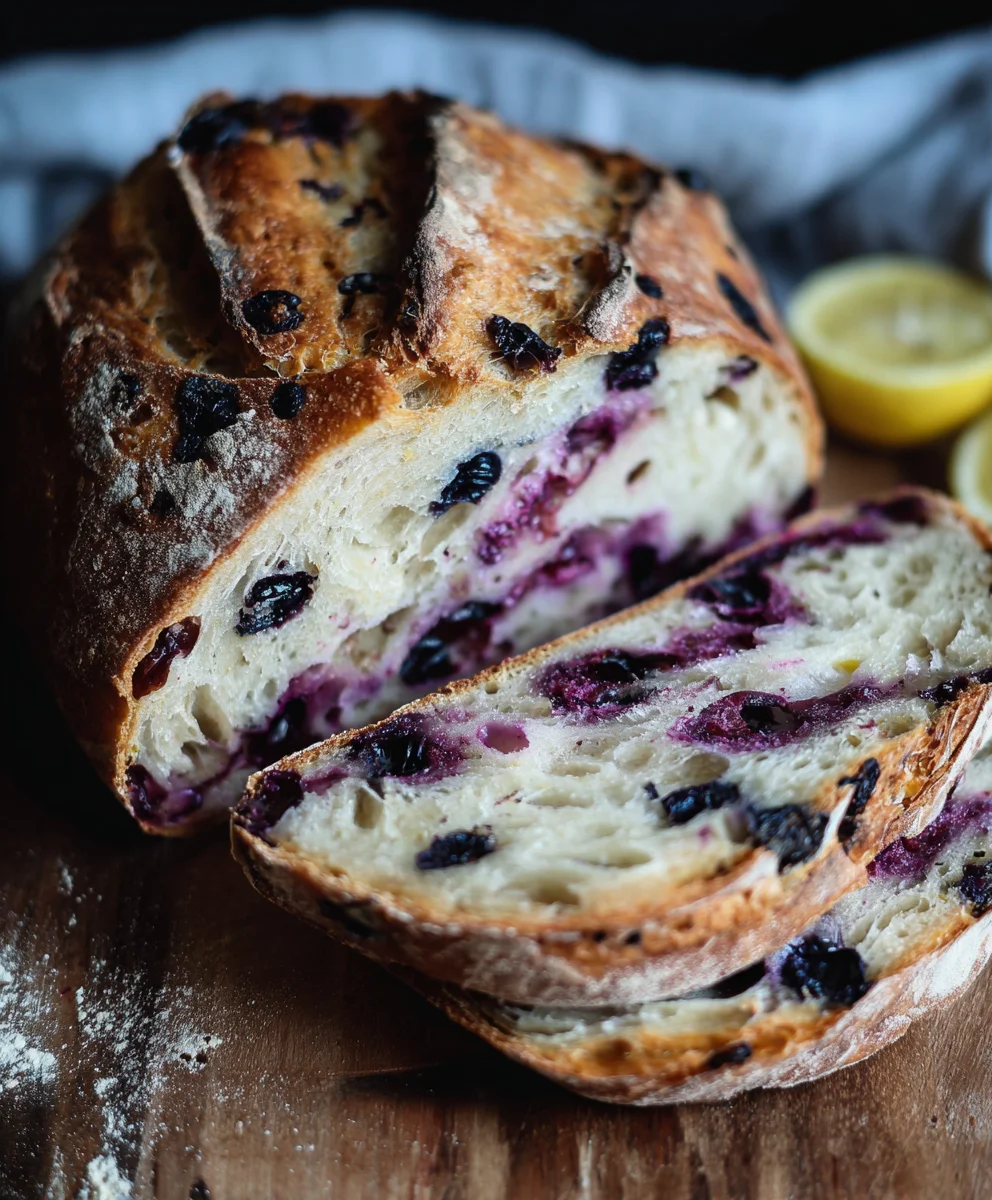
Blueberry Lemon Sourdough Bread-Tangy Sweet Delight
A delightful sourdough bread infused with the tangy sweetness of blueberries and bright lemon zest, perfect for any occasion.
Ingredients
-
3 cups bread flour
-
1⅓ cups lukewarm water
-
¾ cup active, bubbly, and well-fed sourdough starter
-
3 tablespoons white sugar
-
1 teaspoon salt
-
1¼ cup fresh blueberries
-
1 tablespoon fresh lemon zest
Instructions
-
Step 1
In a large bowl, whisk together bread flour and salt. Pour in lukewarm water and active sourdough starter. Add white sugar. Mix until a shaggy dough forms with no dry spots. Cover and let rest for 30 minutes (autolyse). -
Step 2
Gently sprinkle fresh blueberries and lemon zest over the dough. Gently fold the dough to incorporate the blueberries and zest, being careful not to crush the blueberries excessively. Cover and let rest for another 30 minutes. -
Step 3
Perform a series of stretch-and-folds every 30 minutes for 2-3 hours, or until the dough has increased in volume by 50-75% and feels airy. Wet your hands slightly to prevent sticking. Stretch one side of the dough up and fold it over the center. Rotate and repeat for all four sides. -
Step 4
Gently turn the dough onto a lightly floured surface. Shape into a round ball and let rest uncovered for 20 minutes. Then, perform your final shaping into a boule or oval. Place seam-side up into a well-floured proofing basket or lined bowl. Cover and proof at room temperature for 2-4 hours or refrigerate overnight. -
Step 5
Preheat oven to 475°F (245°C) with a Dutch oven inside for at least 30 minutes. Carefully transfer the proofed dough onto parchment paper. Score the top if desired. Gently lower the dough into the hot Dutch oven, cover, and bake for 25 minutes. Remove the lid, reduce oven temperature to 450°F (230°C), and bake for another 20-25 minutes until deep golden brown. Cool completely on a wire rack before slicing.
Important Information
Nutrition Facts (Per Serving)
It is important to consider this information as approximate and not to use it as definitive health advice.
Allergy Information
Please check ingredients for potential allergens and consult a health professional if in doubt.


Leave a Comment